As an Amazon Associate, Ultimate Cat Guide earns from qualifying purchases.
If your shopping list says “cat proofing house,” start with what changed this season. A lamp moved for guests, a flower arrangement on the sideboard or a new cable under the tree creates a route the cat has never encountered. Walk that route before the room gets busy.
Cat proofing house — the room-by-room check
Begin in the room that changed most. Check it once from standing height and again from the cat's usual route along furniture.
Follow a cord from plug to device
Start with holiday lights switched off and look at the whole run. A cord tucked behind a cabinet may still form a tempting loop when it emerges near the socket.
Route intact cords away from paws, secure loose lengths appropriately and keep batteries and small electrical parts put away. Retire damaged cords instead of covering damaged insulation.
A sleeve can organize an intact bundle, but the ends and plugs still need attention. Recheck after vacuuming or moving a chair for visitors.
Identify the plant before it comes through the door
Ask for the exact plant name when ordering a bouquet, and tell guests in advance that the household has a cat. Keep true lilies and daylilies out of the house. Even pollen groomed off fur or water from the vase can poison a cat.
Keep them out of a cat household. A high vase is a weak plan when pollen or fallen pieces can reach lower surfaces.
If a cat may have contacted or ingested a toxic plant, call a veterinarian or animal poison service immediately, before signs appear. Keep the florist's label or a photo for identification.
Walk the route to the breakable
Start at the floor and note the nearby chair, shelf or speaker that provides the next step. Move breakable ornaments away from those landing places and store fragile or heavy pieces behind closed doors.
Display gel has a limited role on suitable surfaces. It cannot make a heavy vase safe at the edge of a favorite perch.
Put easily replaced decorations in the busy room and leave the family heirlooms where a moving tail cannot reach them.
Make a quiet place before guests arrive
Choose a room the cat already uses willingly and check that its normal resources remain available. Tell visitors which door must stay closed and who is responsible for it when luggage comes in.
Leave a familiar hiding place inside the room. If a new cave is part of the plan, introduce it early and leave the old hide available as well.
Decorations that completely displace a normal resting area may send the cat exploring a new and less suitable one.
Do a second check after cleanup
When the gathering ends, look under the furniture for ribbons, hooks and batteries before letting the cat explore again. Check the floor around flower arrangements and any broken item.
A closed cupboard that now contains cleaning supplies needs to close fully with the latch engaged. Return the furniture to its familiar arrangement and remove temporary cables when the lights come down.
The small changes between setup and teardown deserve the same attention as the display itself.
Recheck the guest room with luggage in place
An open suitcase changes the room after the first inspection. Ask guests to close bags containing medication, toiletries or small objects and store those items securely.
Look behind the bedside table after someone plugs in a charger. The cable that was safely routed yesterday may now run right past the cat's regular hiding spot.
Product picks
Alex Tech split sleeve
The slit lets you wrap cables without feeding every plug through an end. Measure the bundle before choosing a size and keep the run out of reach where possible.
Sleeving cannot repair damaged insulation or make a cord chew-proof, so check the ends whenever a room is rearranged.
Vmaisi magnetic cabinet locks
An internal latch can keep supplies behind a closed cabinet without adding a loose loop to its handles. Verify cabinet thickness, surface and adhesive instructions.
Keep both keys where adults can find them and the cat cannot, then test every door after the adhesive has set.
Vmaisi sliding cabinet locks
A sliding lock joins two compatible handles and can be taken off without drilling into the cabinet. Check the gap between handles and make sure the door cannot still open far enough for a paw.
Put the removed lock in a drawer while using the cupboard.
1DFAUL exhibit fixing gel
A small amount under a compatible flat base may reduce movement from an accidental nudge. Read the surface directions and test in an inconspicuous spot first.
Keep the gel inaccessible and move fragile or heavy objects to an enclosed cabinet when a fall would cause harm.
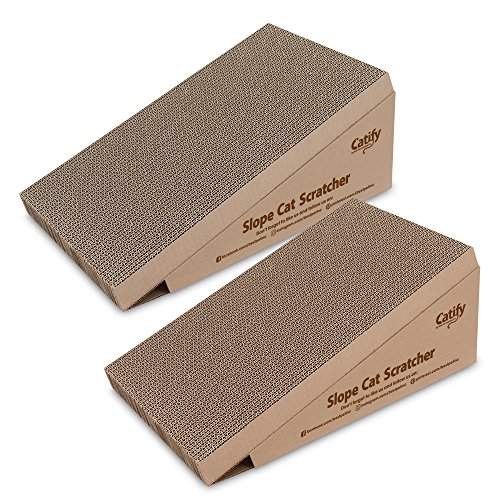
EHEYCIGA angled cardboard scratcher
The cardboard gives a cat that already shreds shipping boxes a familiar feel on an angled face. Put it near the box the cat usually chooses, with the base flat on a nonsliding surface.
Expect some cardboard crumbs and replace the panel or unit when it starts collapsing.
GPPSUNGD gray cave
An upright front opening gives a cautious cat a doorway to inspect before committing to the bed. A cave can sit beside a desk without turning the whole underside of the desk into the cat's hiding place.
Read the dimensions of the selected size carefully because the page describes multiple versions.
FAQ
Are artificial flowers always suitable?
Examine small detachable pieces, wires and ribbons and keep them out of reach. Artificial material removes the plant-identification question but can introduce other hazards.
Can I wrap a damaged cable in a pet sleeve?
Take the damaged item out of service. A removable organizer is intended for routing intact cables and does not repair electrical damage.
How can guests help?
Ask them to keep bags closed, avoid bringing lilies and check with the host before opening the cat's quiet room. Give children an adult to ask first.
What should be stored after presents are opened?
Collect ribbons, loose string, packaging ties and small parts promptly. Put supervising adults in charge of interactive toys before guests begin playing.
Bottom line
Trace the routes that new decorations create and remove the hazard wherever possible. Repeat the check after visitors leave and before the cat returns to the room.